1. Status Nascendi....... Serie CORE p1
creates abstract and multi-perspective art
that bridges architecture, urban space and social participation




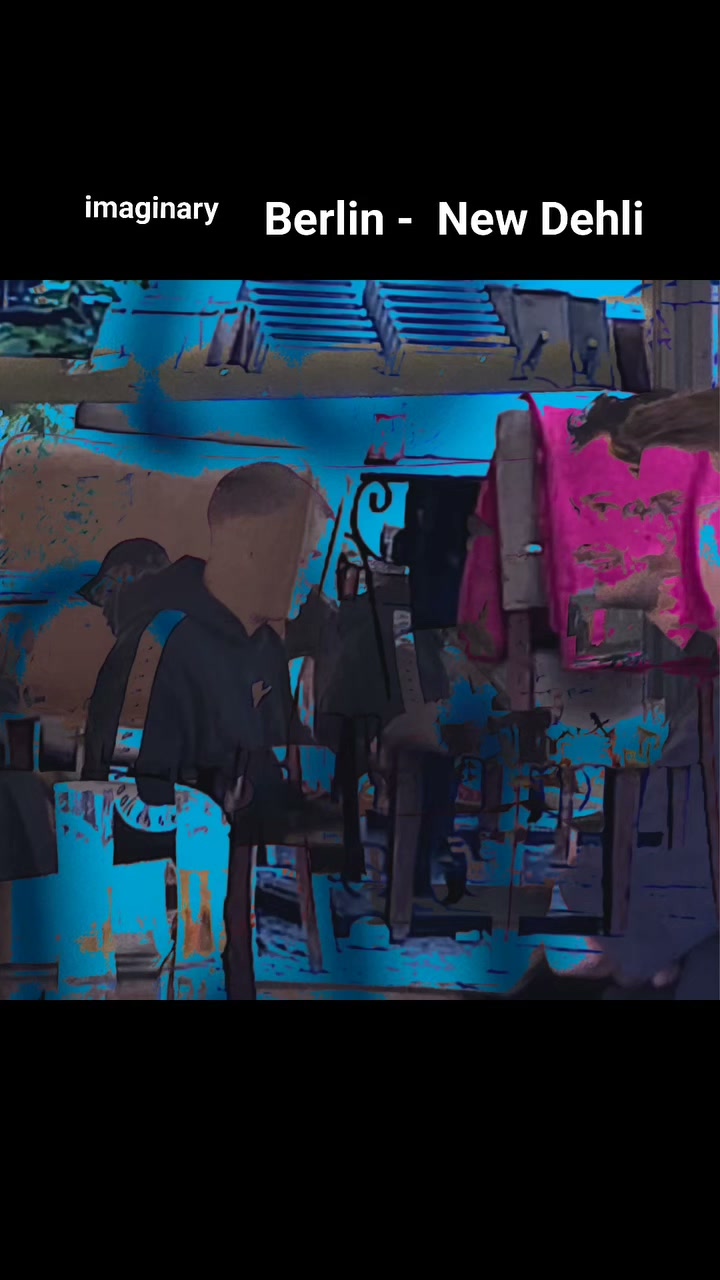
Current

IBA 2034
Text by Raoul Kevenhörster, 10 June 2026
The Ecosystem of Contrasts: Why the International Building Exhibition 2034 Succeeds as a Union of Berlin and Brandenburg.
International Building Exhibitions—IBA for short—are globally renowned laboratories for the future of designed living spaces. They are not merely showcases for architecture; they are concentrated innovation programs measured against societal values, translating visionary ideas into real urban and landscape projects over many years. With discussions now underway for the fourth regional IBA in 2034—exactly fifty years after the 1987 West Berlin exhibition—it must no longer be confined to the Berlin city limits. A contemporary building exhibition unfolds its full impact as an integrative regional project. The end of the physical division of the country into East and West opens up the opportunity today to define the IBA from the start as an inseparable unit of Berlin and Brandenburg. It is about creating a shared ecosystem of contrasts: the dense, vibrant metropolis and the vast, resource-rich Brandenburg landscape are no longer separate worlds in 2034, but the two heart chambers of the same future region.
A look at the demographic realities shows the momentum that makes this shared path inevitable. Currently, around 3.91 million people live in the federal capital, and the trend is sharply upward. By the IBA year 2034, statisticians—according to current population projections by the Berlin-Brandenburg Statistics Office—forecast continuous growth, steering the city straight toward the historic mark of around 4 million inhabitants. So far, the administration has responded to this enormous growth in the usual way, focusing on acute inner-city housing shortages, closing local vacant lots, or converting old factory courtyards. Yet, the most pressing questions for this future four-million metropolis can no longer be solved within Berlin's city limits alone. With its current population of around 2.55 million and a projected stable increase of about 0.4% by 2034, the state of Brandenburg contributes exactly what is needed to master these future crises: space, regenerative resources, and radical transformation areas. Growth in the Mark region is concentrating almost exclusively on the Berlin periphery, which significantly intensifies the pressure for a shared regional planning approach that is synchronized from the very beginning.
Looking back, the major building exhibitions have always sought answers to the crises of their time. The first exhibition in 1910 fought against the misery of the tenement blocks and laid the foundation for regional traffic planning. The 1957 Interbau showcased rapid, modern reconstruction in the Hansaviertel, and the 1987 IBA developed gentle urban renewal in Kreuzberg with the first ecological experiments. Yet, all these predecessors reached political and geographic limits, as the exhibitions were inevitably confined to inner-city quarters due to the decades-long division of the region. The planned fourth IBA in 2034 offers the historic opportunity to finally overcome this division and revitalize the grown unity of Berlin and Brandenburg, thereby resolving the artificial dividing lines between city and hinterland. It is the logical continuation: it elevates the growth pressure of 1910, the housing demand of 1957, and the ecological awareness of 1987 to an entirely new, joint regional level. International Building Exhibitions have historically been laboratories of density. They showed how modern cities can grow, renovate, or reinvent themselves. Yet, the crises of our time—from climate change and resource scarcity to changing life patterns through digitalization—demand larger systems. When the region launches a new IBA, it faces the classic problems of a growing metropolis: extreme density, land scarcity, and immense pressure on existing infrastructure. The decisive unique selling point of Brandenburg in this structure is not to function merely as an expansion area or a "dormitory town" for Berlin. Brandenburg is the necessary counter-model and the perfect complement at the same time.
Berlin is a consumer metropolis; it consumes energy, food, and above all, building materials. This is where Brandenburg's first great strength lies. The state possesses the land and the agricultural tradition for renewable raw materials. A joint IBA could contribute the living lab for a deepened and contemporary regional economy. From timber construction sourced from Brandenburg's forests to innovative hemp and clay building materials grown directly on local fields, and through to serial manufacturing: Brandenburg can show how regional value chains make the building transition in the metropolis feasible. Paired with Brandenburg's pioneering role in renewable energies and the painful yet instructive experience in dealing with water scarcity, a landscape of resilience emerges—one upon which Berlin is directly dependent.
While Berlin must operate within dense, sensitive existing structures, Brandenburg offers space for experiments on a scale that would be simply unthinkable within Berlin city limits. The state is characterized by massive conversion areas—from old military and industrial sites like Wünsdorf or Luckenwalde to the Lausitz region. The structural change in the former lignite mining district makes the Lausitz one of the most exciting European hotspots for landscape transformation. In the wake of the post-mining era, entirely new water and energy landscapes as well as decentralized, self-sufficient quarters are being created here. An IBA with Brandenburg's participation shows the world how the sustainable living spaces of tomorrow arise from the wounds of the fossil fuel industry.
The future of living and working is no longer determined solely in the center. Through digitalization and "New Work," the necessity of physical presence in the inner city is losing importance. Brandenburg's strength is not a centralized urban sprawl, but its tightly knit network of historic town centers, well-connected medium-sized towns, and lively villages. The renaissance of these medium-sized towns—from Eberswalde and Brandenburg an der Havel to Cottbus—sustainably relieves the metropolis. The Mark's unique feature is the link between high quality of life in the green surroundings and an intelligent digital and physical infrastructure. In rural areas, Brandenburg offers the urgently needed experimental spaces for the mobility transition. As one of the first states worldwide, Germany has paved the legal way for autonomous driving at Level 4—fully automated, driverless vehicles—to become part of everyday life. A joint IBA offers the opportunity to bring this technology to market maturity in Brandenburg's vast landscape, for instance through driverless shuttles that finally connect villages flexibly to railway stations.
That this regional approach is the only sustainable path for modern metropolises is proven by a look at international megacities facing the same planning challenges. The closest functional parallel in the German-speaking world is the duo of Vienna and Lower Austria. There, federal and state governments work closely together in urban-regional management, with the surrounding Lower Austria specifically acting as an ecological raw material supplier and forestry partner for Vienna's building transition. When it comes to the strategic linking of dense urbanity and vast spaces, the French century project "Grand Paris" provides the groundbreaking concept of a lived "symbiosis of contrasts." To relieve the extremely dense Parisian core, the entire surrounding Île-de-France region is being radically networked, with autonomous on-demand shuttles being tested intensively in rural zones to flexibly connect villages to regional express train stations. Finally, the Canadian Greater Toronto Area with its "Greater Golden Horseshoe" shows how to prevent the uncontrolled sprawling of a metropolis and protect the rural space. A monumental, planned greenbelt ensures there that the spreading into meadows is prevented and that instead, the surrounding historic medium-sized towns are strengthened as independent, high-tech, and cultural hubs.
Berlin and Brandenburg in Union – The Symbiosis of Contrasts. Under the joint leadership of Berlin and Brandenburg, the IBA 2034 should be organized to function as a living ecosystem of contrasts. Berlin brings density, the investment market, and the pressure for innovation. Brandenburg contributes its vast space, raw materials, and the bold experience with large-scale structural change. Only in this symbiosis does a building exhibition become a forward-looking regional exhibition. Following the insight: "City and country are not opposites, but two poles of an indivisible reality of life." Entirely in the spirit of the Charta of Athens, living, working, and nature are transferred here into a single, large regional structure. What Paris, Vienna, or Toronto are testing in partial areas today can make the Mark-Berlin living lab a global reference in 2034: a functioning, crisis-proof symbiosis of a dense metropolis and a resilient hinterland.
Artist Statement
August 2026
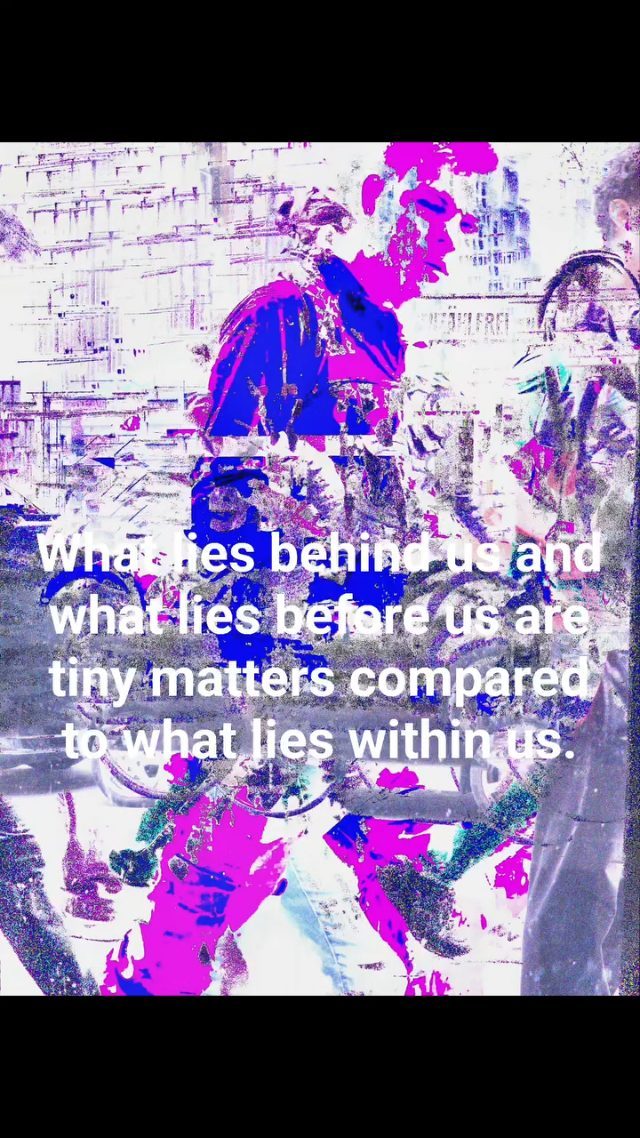
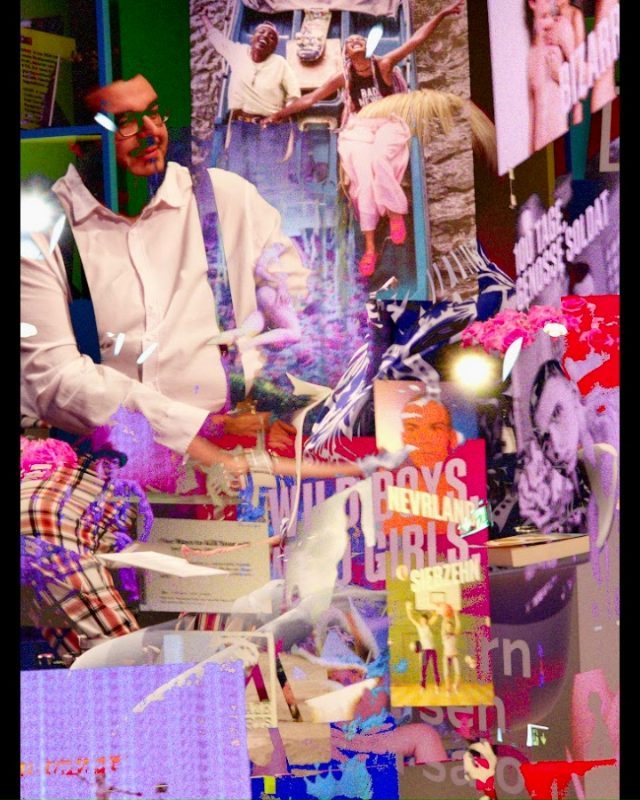
If you dare venture out onto the street nowadays just to size people up, you need strong nerves and a drink. You look, count the idiosyncrasies, call a spade a spade, and in the end, you even fancy you’ve figured something out. Take Axel Ranisch, for instance—that restless filmmaker, director, and author who learned what truly matters in a film back at Berlin’s University of the Arts under Rosa von Praunheim: pure joy of playing, the courage to improvise, and stories grabbed straight from the thick of real life.
This photo series was created during the recording of an interview between Claudia Wick and Axel Ranisch for the Fernsehsalon of the Deutsche Kinemathek. The conversation took place right in the exhibition space of "Inventing Queer Cinema." Through the prism of the director's condensed traces of life, a visual choreography unfolds that puts many a thriller to shame. When his face, contours, and physical frame overlap in the image, he turns into a character in his own right—a walking Gesamtkunstwerk of unbridled energy, corporeality, baroque zest for life, and the subtle mischief of a genuine Berliner.
He presents himself in a classic white shirt paired with striking suspenders. One might almost assume a respectable pillar of society is standing here, were it not for an immediate, winking sucker punch: plaid trousers and red shoes. The bourgeois façade crumbles in milliseconds. This subversive visual fracture stands entirely in the spirit of his former professor Rosa von Praunheim, who shaped him profoundly over the years. Looking at his films, and his artistic body of work as a whole, it quickly becomes clear: here, painful tragedy merges with whimsical lightness, genuine physicality replacing airbrushed glossy perfection. And as the ultimate cherry on top, his grand passion for classical music constantly drives his scenes.
A prime example of Ranisch's signature style is his work at the Komische Oper Berlin, where he thrilled audiences with delightfully eccentric revues like Mokka-Hits und Milchbar-Träume. When you drag past events forward like that, the present dissolves into the background for a moment. In the end, the only thing that sticks is what lingers in the memory as lived history! How did Walter Benjamin philosophize so aptly? "To articulate what is past does not mean to recognize 'how it really was.' It means to take control of a memory as it flashes in a moment of danger." And Bauhaus artist Lyonel Feininger, founder of Prismism, sets yet another layer on top: "There is no foreground or background, only a continuity of interlocking relationships." It is precisely this interplay of history and the present that marshals all forces and unleashes a power capable of jolting viewers out of any passive consumer mindset.
Thus, this portrait study using the photographic technique of multiple exposure captures precisely what matters to me: a nuanced approach that tracks down the character and phenomenon of Axel Ranisch in its own distinctive way.
Artist Statement
August 2026
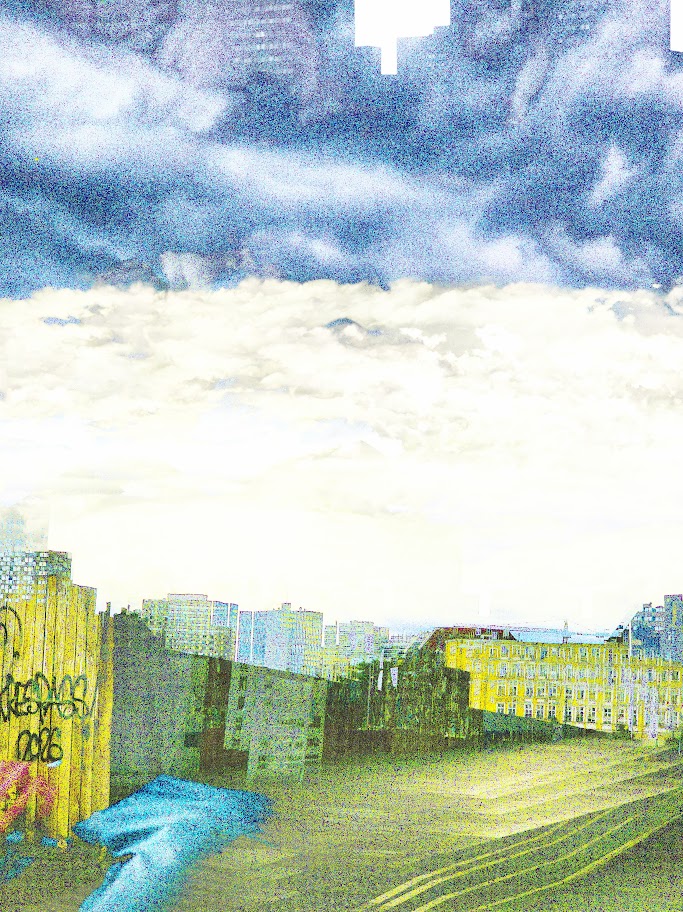
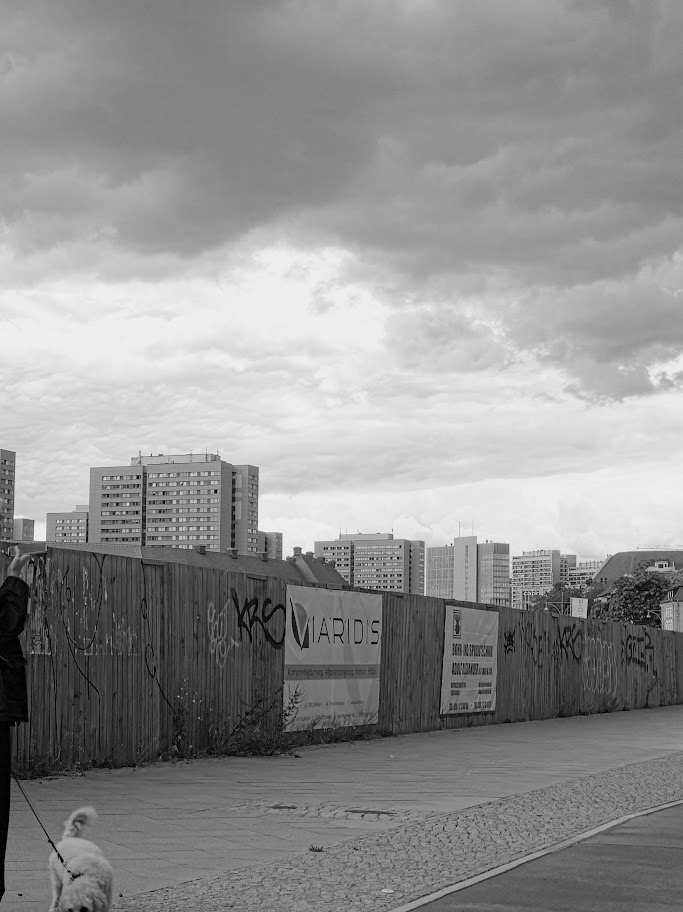
A place fades, yet its energy lingers in the space—as a photographic testimony to Berlin’s urban transformation, my two works reflect the memory of the invisible. At the historical address of Klosterstrasse 62 in Mitte, the sustainable redesign of the "Sixty2" construction project marks yet another metamorphosis of the urban fabric. I embark on a visual search for an architecture that has long since dematerialized within the cityscape. Rather than documenting absence as a loss, I employ the technique of multiple exposure to grasp the site as a space rich in history and to uncover its past as an urban palimpsest. This photographic quest connects directly with the thoughts of Swiss artist and cultural journalist Dörthe Bäumer (born 1964, Münster/Westf.): "Every city carries the phantom image of its own past within it; the invisible traces of vanished buildings often shape the atmosphere of a place more strongly than what is actually still standing." This theoretical foundation ties in closely with the reflections of Swiss sociologist Lucius Burckhardt (1925–2003, Basel) that urban landscapes primarily emerge as perceptual constructions of the observer. As architecture and art historian Vittoria Di Palma (born 1966, New York) emphasizes, urban brownfields unfold their aesthetic power precisely through the exposure of concealed strata of time. There, the unfinished stimulates the imagination, while the fragmentary develops its own poetry of transience.
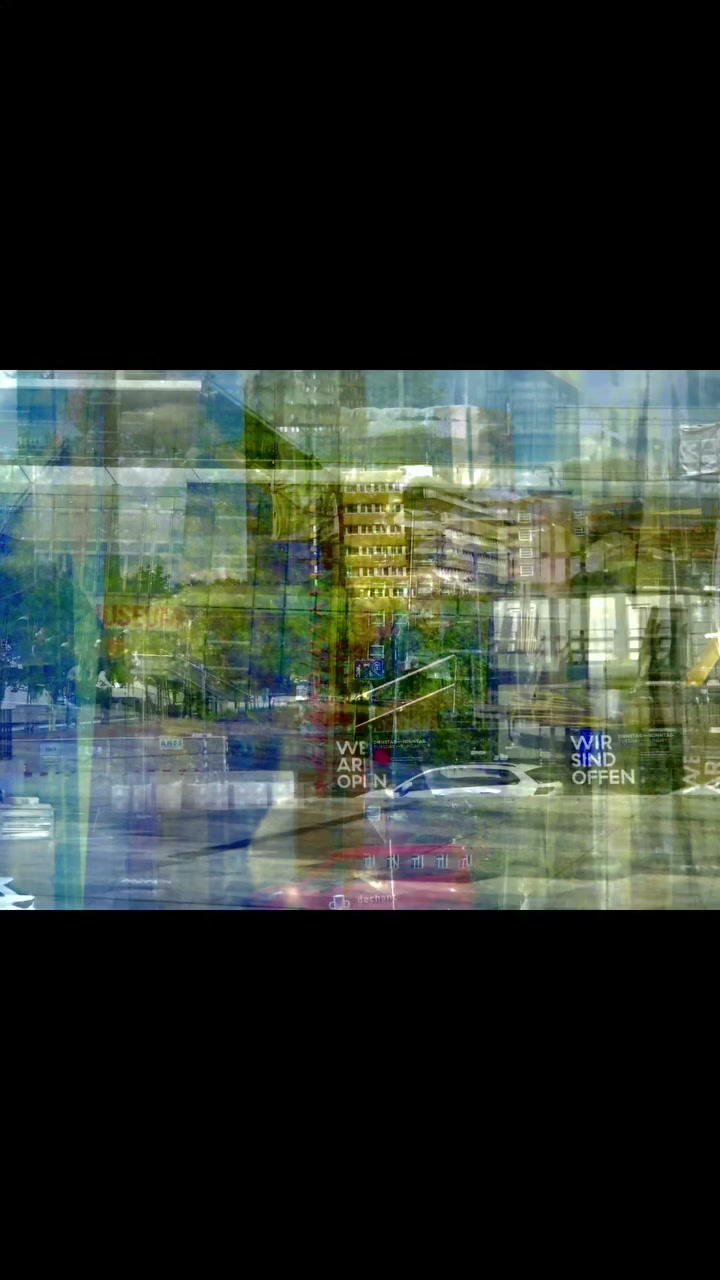
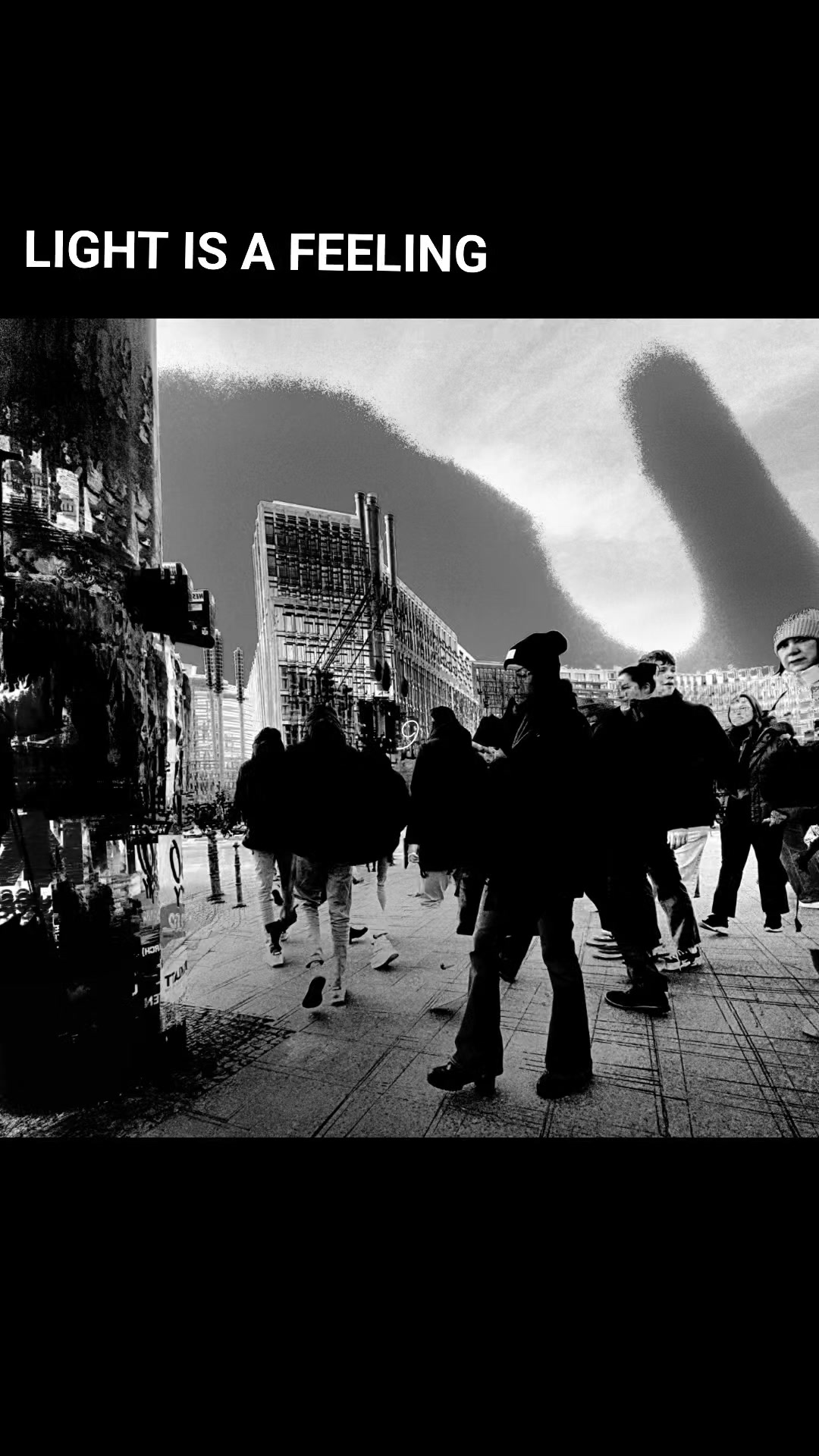
My photographic works were created on June 21, 2026, at the corner of Klosterstrasse and Grunerstrasse in Berlin-Mitte. Through numerous overlays, they condense the architectural transition process amidst the urban environment. On this site, the sustainable redesign of the former GDR building into the "Sixty2" project—designed by Tchoban Voss Architekten—is taking shape as sophisticated construction within the ongoing urban context on the historic grounds of the former Palais Schwerin. That magnificent Baroque jewel served as the workplace of the scholar of neuhumanism and classical liberalism Wilhelm von Humboldt (1767–1835, present-day Berlin) before it was destroyed in the Second World War and replaced in the 1970s by this GDR administrative building. Instead of demolition, today's renovation relies on the sustainable transformation of East Modernism under the slogan "Rethink the Platte." This principle does not view the serial concrete construction of the GDR era as an urban planning flaw; rather, it conceives the embodied energy bound within the reinforced concrete of the shell structure as an invaluable resource for contemporary, circular architecture. Although the historic Chaos Kluster from the 13th century did not stand directly on this building plot, but a few meters away in the quarter, my composition symbolically weaves the current construction site together with the entire historical aura of the monastic quarter.
The two multiply exposed images make the invisible speak: As a pictorial triptych, they combine the architectural heritage with the temporary traces of the major construction site and the building fronts of the surroundings, while the Berlin cloudscape arches above. In the foreground, graffiti tags document the contemporary scenery. At the same time, these profane fragments are overlaid by immense, overexposed fields of light and clouds that dissolve the motif upward. I thereby create a prismatic sacrality. In the dense layering of light and shadow, the predecessor buildings emerge as an energetic protective envelope over the construction site.
Through artistic reflection, my photographic work points toward a substance-preserving renewal that extends far beyond the mere management of history. Embedded in real Berlin structural change—as currently unfolding during the renovation phase at the nearby Molkenmarkt and demonstrated at the House of Statistics—the site stands representatively for contemporary building culture. From the once inaccessible, bureaucratic monolithism of the GDR era emerges a humanistic, circular place that shifts the focus from pure representation to lived urbanity and accessibility. I transform classical photography from a tool of pure documentation into an instrument of visual archaeology. "Rethink the Platte" – Klosterstrasse Sixty2 reveals the future of the city in the awareness of its invisible strata of time as a space for the building culture of tomorrow. In the sense of architect and urban researcher Rem Koolhaas (born 1944 in Rotterdam), this processual character of urban development shapes itself as "the continuous construction of the human mind out of reality and perception."
Artist Statement
Artist Statement
June 2026
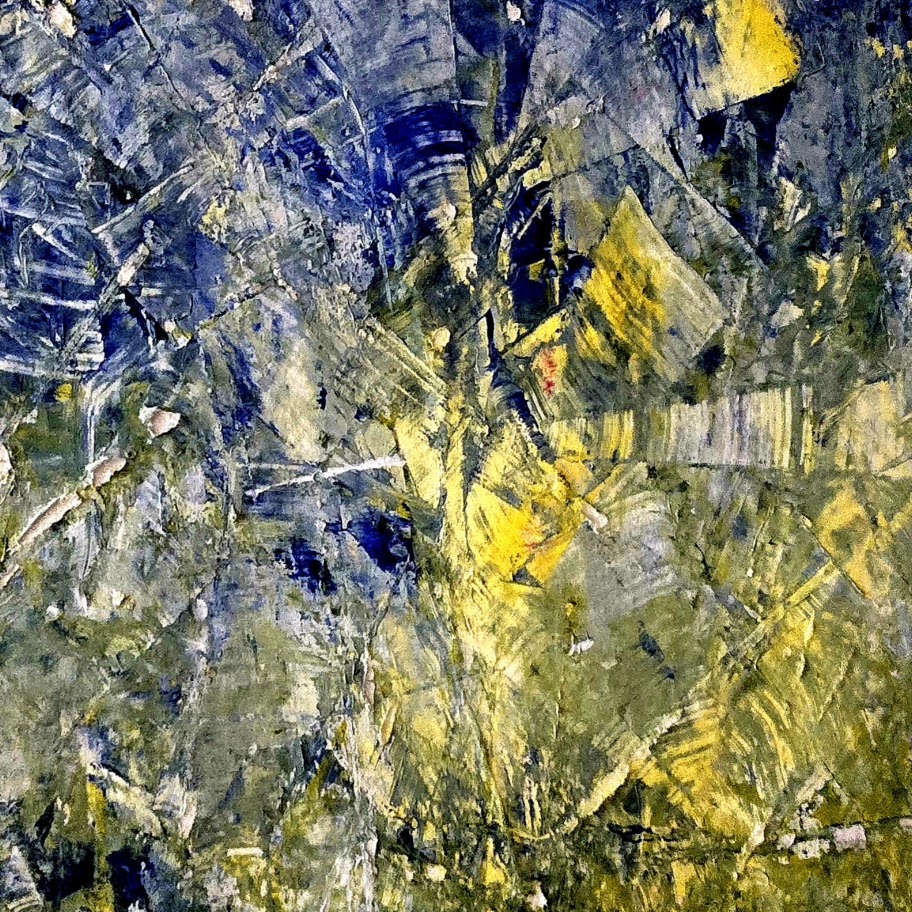
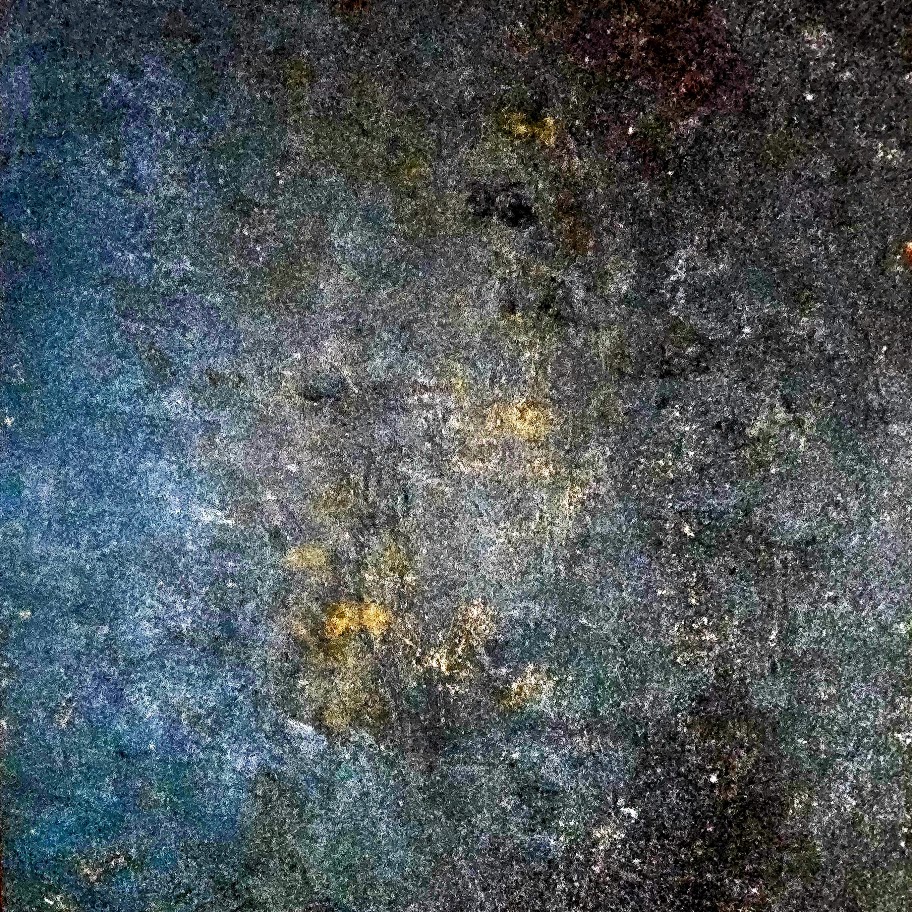
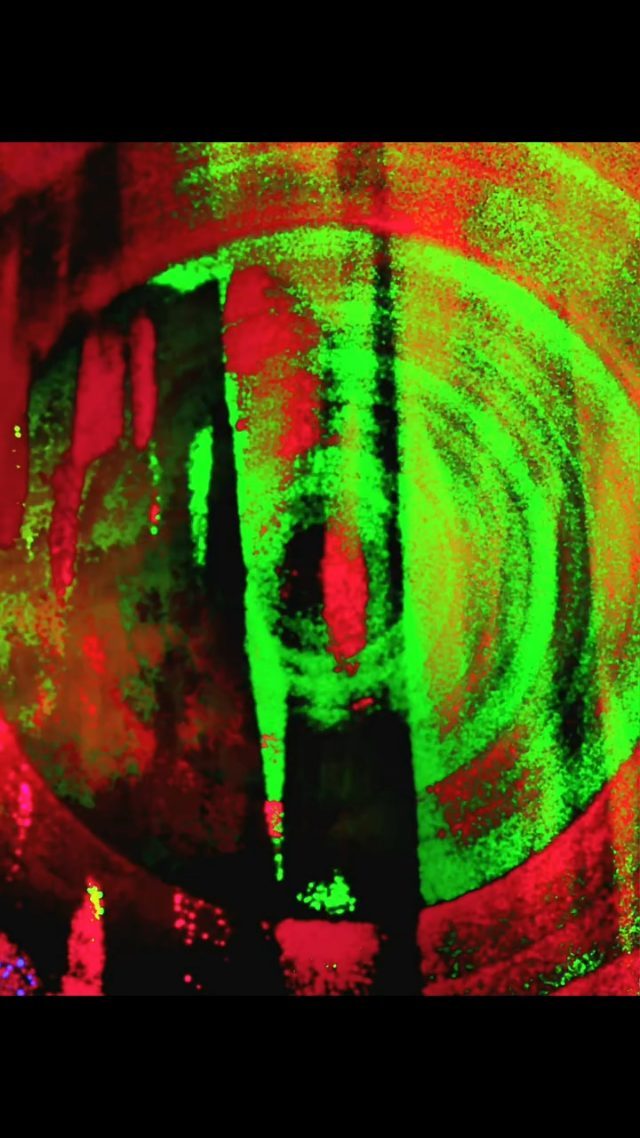
Paths to Insight Between Stardust and the Foundation Pit
1. The Demand of Space
"The only constant in life is change," taught Heraclitus. We navigate landscapes that transcend mere
physical space; they are resonance chambers of our existence. Each sensory impression, every image
we capture, serves as an orientation point in a world that recomposes itself in every moment. We
measure the unfathomable by imbuing the energy that surrounds us daily with structure—a perennial
search for stability amidst the kinetics of duration.
2. The Dialectics of Weight
This field of tension is best illustrated by two opposing poles: On one side stands the perspective of
Carl Sagan (1934–1996), who, in his seminal work "Cosmos," envisions the universe as an
architecture of immanent, physical order. Conversely, the Russian writer Andrei Platonov (1899–
1951) challenges us: in his work "The Foundation Pit" (Kotlovan), it is the existentially charged weight of
matter that interrogates the world, while his novel “Happy Moscow” (Schastlivaya Moskva) portrays the
arduous construction of the subway as human agony and a profound, painful anchoring in the
underground. Between these poles, architecture unfolds as a necessary process: it is a continuous
becoming that does not merely grasp space formally, but functions as a built manifestation—a direct
formation of our existence, in which life is understood as a permanent construction.
3. The Constructive Interface
Here, the encounter takes place between cosmic order—a state of constant contingency and fragile
constellation, in which weight masquerades as a condition of suspension—and the existential weight of
Platonov’s world. The latter is permeated by suffering, fleeting joy, and that paralyzing inescapability
which remains the only certainty. My works are created through the pictorial layering of multiple
moments in time — often with a density of image layers in the high double-digit range — a structure
emerges that redefines space as a highly complex, elastic event. The work does not document a
conventional perspective, but presents a processual, formative act of transformation on an image-
edifice. By architecturally constructing this condensation, I open a resonance chamber in which insight
acts as a shared experience.
4. The Unnamed Threshold Space
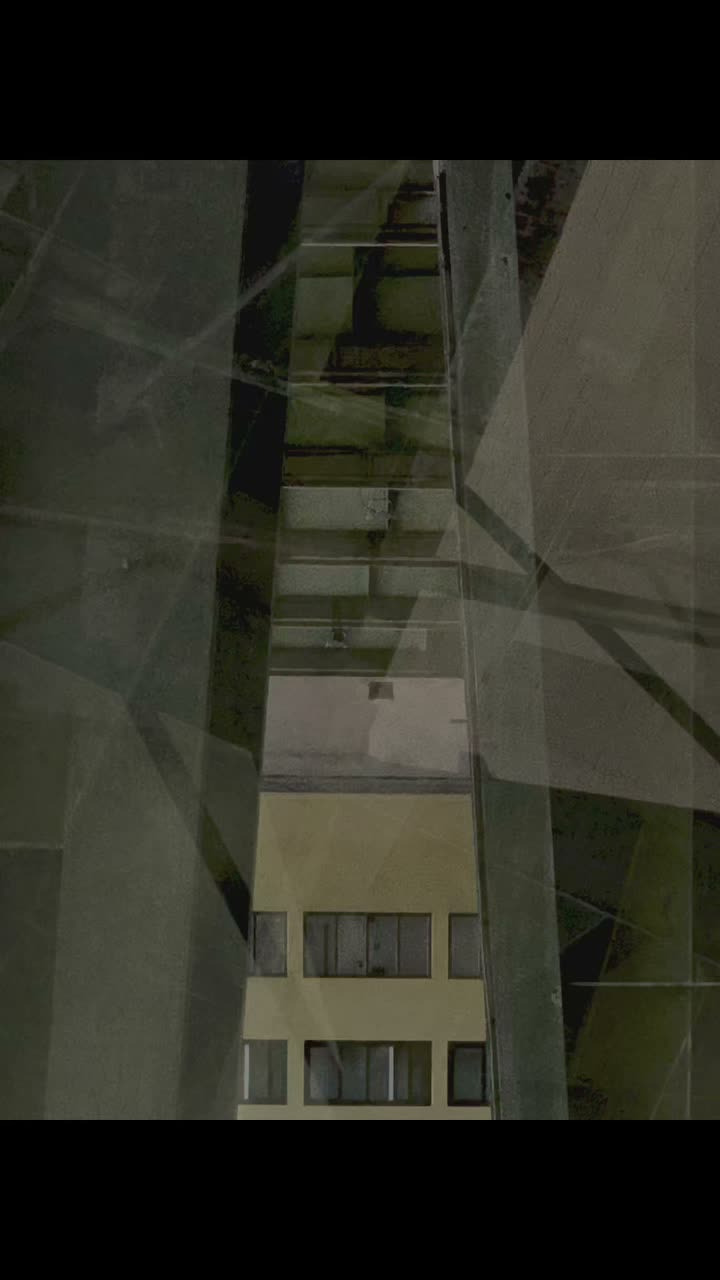
In the layering of these photographic works, architectural fixpoints function to stabilize the visual
narrative flow and offer the gaze a foothold. Precisely here gapes the unnamed intermediate space—an
element of indeterminacy that only defines itself through perception. It is a threshold space where
cosmic perspective, statics of construction, and the dynamics of city life collide.
5. The Phenomenological Reduction
This space demands engagement. It is not intended to be inhabited. To grasp it in its depth requires an
attitude that transcends mere analysis: a form of phenomenological reduction, a state of conscious
openness in which all conceptual preconceptions are suspended. In this mode of perception, a
dissolution of the ego from its fixed identity takes place, akin to what Friedrich Schiller described as a
merging with matter.
6. The Moment of Shaping
It is not a blind affect, but a highly concentrated receptivity that allows the urban fabric and the cosmic
reference to be experienced as a unity. My images are created directly on site, in a conscious
engagement with the environment. Here, the individual human being enters the image as a vessel for
those fleeting impulses in which the statics of matter reveal themselves as a lived experience.
7. The Paradox of Routine
Naturally, this process of deep perception is no guarantee of enlightenment. Mostly, it occurs in the
most profane of moments: while waiting at a traffic light whose timing is as relentless as the cosmic
order itself, or in the dense crush of the subway, where one suddenly realizes that the "multiple
coordinate system" of the world consists of nothing but a large number of people all trying to remember
where they left their bags. Here, in the absurdity of the everyday, the circle closes—for it is precisely in
this moment of amusement that realization becomes the most human of impulses.
8. The Kinetics of Insight
Insight does not unfold linearly here; it is a charging interplay, a constant layering and reflection, in
which the retardant moment—the hesitation before final determination—serves as a necessary
corrective. Insight thus becomes a cumulative movement: a layering in which every new understanding
rests upon the previous one, while simultaneously casting it into a new, elastic light. Only in this
openness can the multiple coordinate system transition from a theoretical construct into a living
intuition. In this state of highly intense consciousness, the actual encounter of forces unfolds.
9. Three Modalities of Transformation
When the systematic engagement with Sagan’s physical order meets the existential friction of
Platonov’s world—the anthropological shock, the sensory experience, and the fleeting movements of
the soul—that spark arises in which, through analytical precision, insight can emerge from condensed
perception. This movement unfolds in three modalities: 1. Physical movement: The gaze probes
stratifications and measures the architectural force fields of urban infrastructure. 2. Cognitive
movement: The mind oscillates between the poles of order, significance, and endurance. 3.
Transformative movement: Insight does not appear here as a static result; it releases itself from the
continuous shifting of the viewpoint.
10. Architecture of the Gaze
This practice transforms the photographic image into an optical installation. While artists like Tomás
Saraceno or Gordon Matta-Clark thematize the relationship between human, architecture, and cosmos
through spatial interventions, I perform this act through a dynamic architecture of the gaze. My images
are a constructive process: I reassemble the space of exposure from different points in time in order to
re-map it as a complex constellation grown in layers.
11. The Cartography of Impact
We do not map the result; we visualize the impact. In this undefined area, in this threshold space of
action, experience is composed of sensory reflection, architectural process, philosophical inquiry, and
the vast, infinite gaze upon the cosmos. Why, then, do we measure space? Measuring is far more than
an analytical act; it is a fundamental act of unfolding. In a tradition that defines survival through holding
on, remembrance through naming, and understanding through perpetual questioning, my dynamic
cartography becomes an existential expression of life. It is an act of bearing witness to a fragmented
world—an attempt not to mend its fractures, but to anchor oneself within them through an active,
sustained engagement.
12. The Constitution of the Landscape of Essence
My pictorial composition serves as the catalyst for the constitution of the landscape of essence: It is no
longer an external depiction, but the result of that layering in which architecture, time, and human
experience merge into a unity. At this moment, when cartography reaches its limits, the image takes
form anew as a constructive act of realization: truth emerges as a contingent construction. It is here that
the essence of the image reveals itself as an open resonance chamber for existence.
evidare magazin
THE ESSENCE OF LUXURY LIFESTYLE
AZ/Architektur Zeitung
Architecture Journal
Armin Völckers
Painter and filmmaker
Hans Koch
Managing Director of ndF Berlin, Producer
Dr. Klaus Memmert
Atelier und Showroom Galerie Beyond Reality
Prof. Mathias Allary
Movie-College and Allary-Film, TV & Media in Munich
Fritz Göran Vöpel
Digital architectural reconstruction
Stefan Beutner
Chairman of the German-Indian Society Berlin e.V.
Publications
Festival International du Film de Fribourg (FIFF)
Festival report and context.
Read article22. Jüdisches Filmfestival Berlin & Brandenburg
Article on the festival program and themes.
Read articleAccessible Filmmaking
Feature article about inclusive filmmaking practices.
Read articleNetwork
In consultation with friends and acquaintances: discover more here.
Alexander Wienand & Urs Johnen
Silent Jazz Bar
Aviv Koriat
Kuchenmanufaktur
Barbara Yelin
Comickünstlerin
Bo Larsen
Künstler
Boris Eldagsen
Fotokünstler
Carmen Einfinger
Künstlerin
Christoph Schauer
Komponist
Göran Vöpel
Digitale architektonische Rekonstruktion
Hendrik Backerra
Consulting
Johannes Hitzblech
Schauspieler / Coach
Klaus Memmert
Galerist
Michael Blum
Regisseur / Fotograf
Michael Wesely
Fotograf
Michael Wismar
Künstler
Peter Lorenz
RENATE Comicbibliothek
Sharon Adler
Journalistin, Fotografin, Moderatorin
Sebastian Wagner
SWA Group / Architekt
Stefan Weber
Geigenbau & Kunst
Stefanie Pech
Künstlerin
Sven Taddicken
Filmregisseur / Drehbuchautor
Tim Garde
Schauspieler / Coach
TUTU Wagner
Modedesign
Volker Nikel
Malerei & Skulptur
Waldemar Mattis-Teutsch
Lichtkünstler
Werner Tammen
Galerist
Zafer Ygitoglu
Uhrendesign & Vertrieb
Markus Rausch
PIVASOFT GmbH - SMART SOFTWARE SOLUTIONS
Motto
TEACH ME TO DANCE !
“Internal positioning determines a person's physical location.”
Visionary art for companies, independent organizations and public institutions
2024 © Jan Sobottka www.catonbed.de